

Manchester Community Campus Engagement Workshop
Start Date
27/01/26
End Date
27/01/26
Location
Rosamond St W, Manchester M15 6EB, UK
Lead
Youth Charter and Manchester Metropolitan University
Report

main Impact Outcome
6. Collaboration & Partnership - SDG 17
Share
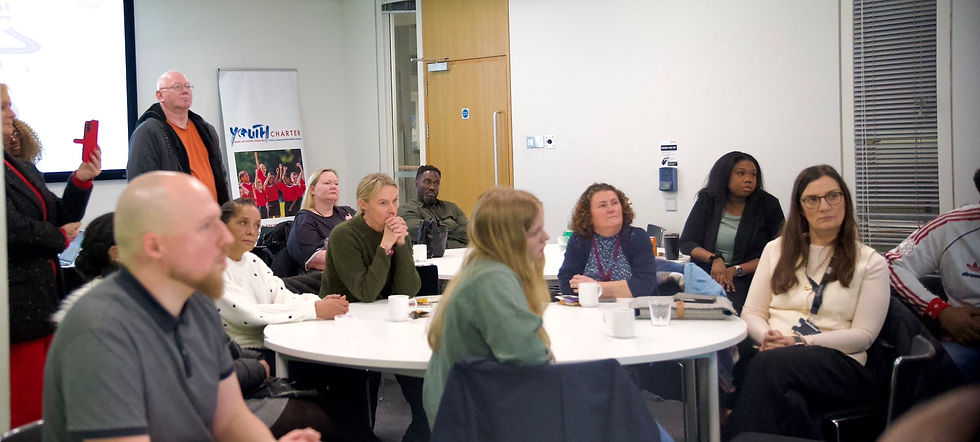
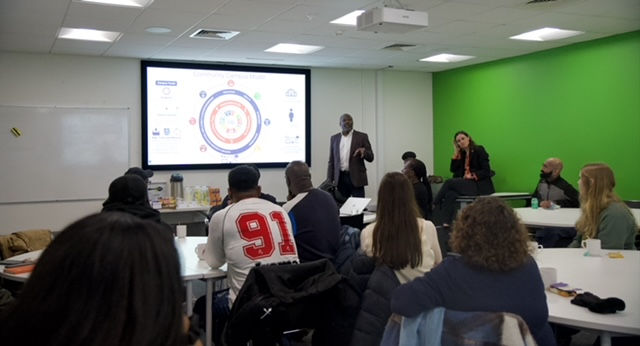
The Youth Charter Youthwise Social Coach Stakeholder Engagement Workshop, held in Manchester on 27 January 2026, marked the third in a series of consultations focused on the development of a sub-regional Community Campus network across Greater Manchester.
Over more than three decades, the Youth Charter has advanced the belief that sport, art, culture and digital engagement are powerful vehicles for social transformation. What began as a vision to use sport as a catalyst for change has grown into a global movement for Sport for Development and Peace. Yet the work remains rooted in our communities, in the streets, schools and neighbourhoods of Greater Manchester where the challenges facing young people are both immediate and profound.
The Community Campus Model provides a structured, accountable and scalable vehicle for delivery. It provides a collaborative framework through which public, private and community sector partners can share resources, align expertise and collectively deliver life chances, hope and opportunity to those who need it most.
The workshop introduced and strengthened two central pillars of this work:
The Youthwise Programme, delivering sport, art, culture and digital pathways.
The Social Coach Leadership Programme (SCLP), empowering trusted adults and community leaders (Social Coaches) to engage, equip and empower young people through values-led practice
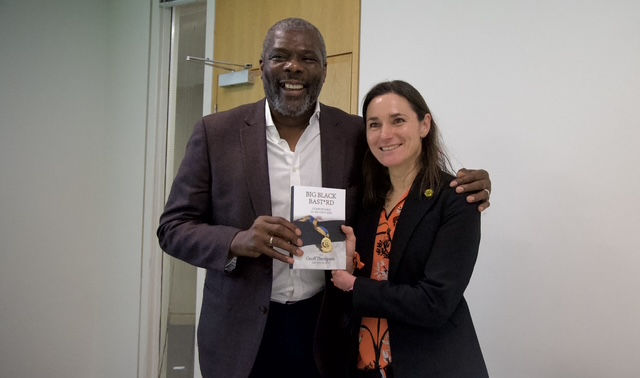
Our ambition is clear. Across ten Community Campuses, supported by 10,000 trained Social Coaches, we aim to directly impact one million young people. This is not a single project; it is a movement, one built on partnership, shared accountability and measurable social impact. The presence and contribution of Dame Sarah Storey during the workshop reinforced the authenticity of this approach.
However, inspiration alone is not enough. Across our communities, we are witnessing unacceptable levels of youth disaffection and harm. When a nine-year-old loses her life to violence, or when children carry knives to school, it is a signal that fragmented approaches are no longer sufficient. We must move beyond labels and siloed responses. We must apply urgency, collaboration and courage.
The Community Campus Model provides that vehicle. It aligns youth and community engagement with a cultural framework and a matrix of social impact. It brings together creativity, enterprise, education, health, and sport under a shared commitment to measurable and sustainable change.
I hope that all who read this report will ask themselves the same question that closed our workshop.
What can I do, and how can I contribute, to ensure that these Community Campuses become a living legacy of hope, opportunity and impact for Greater Manchester and beyond?
Prof Geoff Thompson MBE FRSA DL QP JM
Inputs

Time Utilisation
Hours

Investment
Outputs

20
Stakeholder Partners

30
Participants

5
Facilitators
Video Gallery


Image Gallery




Impact Outcomes
Youthwise Project Outcomes are set against the following 7 UN 2030 Sustainable Development Goals (SDGs) that deliver the Youth Charter Community Campus Model and Legacy Cultural Framework:

Education

Health

Citizenship

Environment

Further & Higher Education,
Employment & Entrepreneurship

Collaboration & Partnership
