

Africa Day - Sport for Development for Africa's Youth...
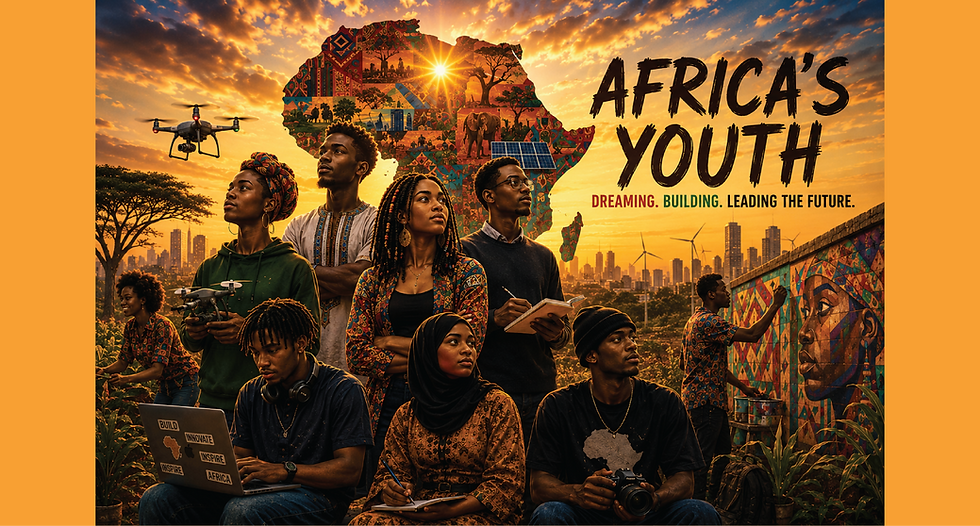

On a day where the African continent celebrated its past, present and future, there can be no greater time to provide a youth offer of hope and opportunity.
The recent Africa CEO Forum in Kigali placed a powerful spotlight on Africa's economic future. Across discussions on investment, ownership, industrialisation, technology and growth, there was a shared recognition that Africa possesses enormous potential. The message was clear: Africa must embrace scale if it is to compete, prosper and define its own destiny. However, there is another conversation that cannot remain in the margins.

Economic scale without social scale risks becoming growth without inclusion, prosperity without participation and investment without impact.
For all the discussions about capital, infrastructure and markets, Africa's greatest competitive advantage is not buried beneath the ground or found within its balance sheets. It is not oil, minerals, data centres or trade agreements. It is its young people.

Africa is home to the world's youngest population. Within this demographic reality lies perhaps the greatest opportunity of the twenty-first century. Yet demographics alone do not guarantee destiny. A youthful population without pathways can quickly become a population of frustration. Economic growth without community investment can deepen inequalities rather than reduce them.

The challenge for governments, investors and development institutions is not simply asking: "How do we grow Africa?" The question must become: "Who benefits from that growth?" And perhaps more importantly: "How do young people become co-creators of Africa's future rather than spectators of it?"

Too often, youth development remains isolated within ministries of education, youth departments or social policy initiatives, disconnected from economic planning. At the same time, sport, culture and the arts continue to be viewed as social activities rather than strategic investments. This is a missed opportunity.
Sport for Development and Peace has long demonstrated that its value extends far beyond medals and participation rates. Sport builds confidence, resilience, leadership and social cohesion. Culture shapes identity. Arts and creativity unlock innovation. Together they create environments where young people do not simply acquire skills; they discover purpose. They become connected, empowered and become leaders.

The Youth Charter Community Campus Model was built precisely around this understanding. Through its Engage, Equip and Empower approach, communities become ecosystems where education, enterprise, sport, culture and social support operate together rather than separately. Community Campuses are not merely facilities, they are pathways.
They provide spaces where young people can transition from the classroom to the playground, and beyond the school gate into employment, entrepreneurship and community leadership.

Equally important is the role of the Social Coach Leadership Programme, recognising that young people often need more than technical instruction; they need mentorship, emotional intelligence and trusted guidance. The future workforce will increasingly require both human intelligence and artificial intelligence, but human connection will remain irreplaceable.

As Africa moves toward landmark moments such as the Dakar Youth Olympic Games and continues implementation of continental ambitions through regional integration and development agendas, there is an opportunity to think differently. Not simply economic scale, but human scale. Not just GDP growth but community growth. Not just ownership of resources but ownership of opportunity.
Africa's future cannot be measured solely by stock exchanges, investment flows or economic indicators. It must also be measured by the number of young people who believe they have a place within that future.
The streets of Africa are already filled with untapped entrepreneurs, artists, athletes, innovators and future leaders The question is not whether the talent exists, it is whether the systems around them will recognise it.
The Youth Charter believes the answer lies in creating pathways where economic ambition and social transformation move together because Africa's future will not ultimately be built in boardrooms alone.
It will be built on the streets, in communities, on playing fields, in classrooms and through the dreams of young people who simply need the opportunity to be seen.
"For the streets, by the streets."


Comments