

Mandela Day: From Inspiration to Action – The Youth Charter Journey in Building the Global Sport for Development and Peace Movement...

"Sport has the power to change the world. It has the power to inspire.
It has the power to unite people in a way that little else does."
Nelson Rolihlahla Mandela

Every year on 18 July, the world pauses to celebrate Nelson Mandela Day - a day dedicated not simply to remembering a remarkable leader, but to renewing our collective commitment to service, justice and humanity.

For the Youth Charter, Mandela Day has never been a symbolic date on the calendar. It has been a living reminder of a promise that the values embodied by Madiba could be translated into practical action through the transformative power of sport, art, culture and digital innovation.
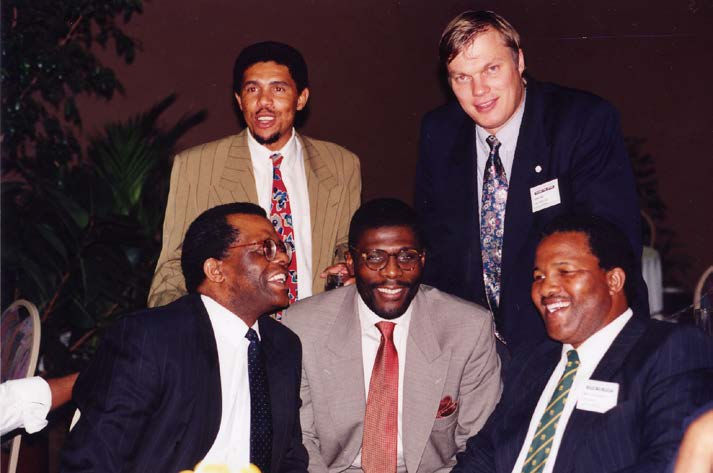
More than thirty years ago, as South Africa emerged from apartheid and a new democratic nation was born, the Youth Charter was itself taking shape in Manchester. Eight months later, the Youth Charter presented its vision for Sport in South Africa. Three years later, on June 16th, Youth Day, the Youth Charter was launched by then President Mandela with the sportsmen and women of South Africa who assembled with the Mandela Scroll signed on behalf of the young people of the Rainbow nation.

Inspired by the global movement for equality, inclusion and reconciliation, we recognised that young people everywhere faced their own struggles -poverty, exclusion, violence, racism, unemployment and hopelessness. Mandela taught us that freedom is not simply the absence of oppression; it is the presence of opportunity. That simple but profound truth became the foundation upon which the Youth Charter was built.

For too long, sport had been viewed primarily through the lens of competition, medals and commercial success. Mandela challenged the world to see something much greater. He demonstrated that a rugby ball, a football, a boxing ring or a karate dojo could become places where prejudice is dismantled, confidence restored and communities reunited.
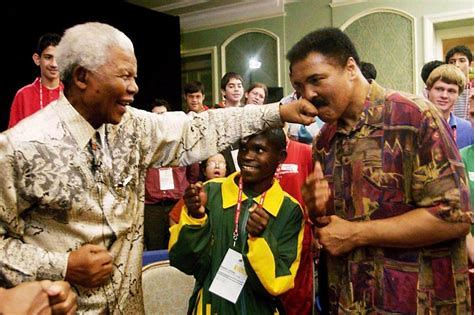
His vision transformed sport into an instrument of diplomacy, peace-building and nation-building. It is a philosophy that has guided every chapter of the Youth Charter's work from local neighbourhood projects to global policy forums.

Whether working with disadvantaged young people in Manchester, supporting communities across the Commonwealth, engaging with the United Nations Sustainable Development Goals, or developing Community Campuses across the United Kingdom and internationally, one principle has remained constant: Sport is not the end in itself. It is the beginning of social change.

Like many around the world, I have long regarded Nelson Mandela as one of my greatest inspirations. As a five-time World Karate Champion, I understood the discipline required to succeed in sport. Madiba helped me understand the responsibility that comes with success. He demonstrated that true champions are measured not by the trophies they collect but by the lives they transform.

That understanding shaped my own journey beyond the dojo and into communities, classrooms, prisons, youth centres and international institutions where sport became a language of hope. It was never about producing champions in competition alone; it was about producing champions in life.

The Youth Charter was founded on the belief that the journey from the playground to the podium should never exclude those whose greatest competition is overcoming disadvantage. Through programmes such as the Community Campus, Social Coach Leadership Programme, Race for Peace, Youthwise, Soccerwise, Artwise and countless local initiatives, we have sought to translate Mandela's ideals into practical opportunities. Our philosophy has always been simple:
Engage. Equip. Empower.

Engage young people before exclusion becomes permanent. Equip them with skills, confidence and opportunity. Empower them to become leaders within their own communities. This is Mandela's legacy in action.

From Local Communities to Global Policy, the emergence of the global Sport for Development and Peace movement owes much to Mandela's moral leadership. His influence can be seen in the recognition of sport within the United Nations agenda, the Olympic Truce movement, Commonwealth values and the growing understanding that physical activity contributes not only to health but also to education, social inclusion, economic development and peacebuilding.

For more than three decades, the Youth Charter has sought to contribute to this international movement through advocacy, partnership and practical delivery. Today, as communities confront new challenges such as mental health, social isolation, youth violence, digital exclusion, extremism and widening inequality, the relevance of Mandela's message has never been greater.

67 Minutes and a Lifetime of Service - Mandela Day asks each of us to dedicate 67 minutes of service in recognition of the 67 years Madiba devoted to public life.
The Youth Charter believes those 67 minutes should become a catalyst for a lifetime of commitment. Imagine every school opening its facilities beyond the school gate, every sports club mentoring vulnerable young people, every business investing in community coaching, every former athlete becoming a social coach, every community becoming a Community Campus. That is the movement Mandela imagined. That is the movement we continue to build.
A Global Call to Action
As we commemorate Mandela Day, we renew our commitment to ensuring that no young person's potential is determined by the postcode into which they are born.

We call upon governments, sporting bodies, educational institutions, businesses, civil society organisations and communities to work together to place young people at the centre of policy and investment. Sport alone cannot solve every social challenge. But when combined with education, culture, health, employment and community leadership, it becomes one of the most powerful forces for positive change available to humanity.

The Youth Charter's vision remains as relevant today as it was when it was founded over thirty years ago. Not simply to create better athletes, but to create stronger communities. Not simply to inspire participation, but to inspire purpose. Not simply to celebrate Mandela's words, but to live them.
Mandela's Legacy Lives On
Nelson Mandela showed us that courage is stronger than fear, reconciliation more powerful than revenge, and hope greater than despair. His legacy belongs not only to South Africa but to every young person who dares to dream of a better future.
For the Youth Charter, Mandela Day is therefore not simply a day of remembrance, it is a day of renewed responsibility to continue building the global Sport for Development and Peace movement and to create opportunities where others see obstacles. A responsibility to ensure that every playground, every community centre, every school, every sports club and every Community Campus becomes a place where young people can discover not only what they can achieve but who they can become because that is the true measure of Mandela's legacy and that is the journey we proudly continue.
Vision without action is but a dream
Action without Vision is merely passing time
Vision with Action can change the world
Nelson Rolihlahla Mandela


Comments